DH Dental & CBCT Center
A Complete Oral & Cosmetic Solution
112A, First Floor, B-Block, Paras Trinity, Sector 63, Gurgaon
Mobile- 09873757074
SERVICES
Denta lworld is a group dental practice with general dentists and dental specialists available in the same center. Highly qualified dental specialists in the following specialities are available to provide dental care of contemporary international standards
1. Oral and Maxillofacial surgery
A. Extraction:-
Tooth extraction is the removal of a tooth from its socket in the bone. If a tooth has been broken or damaged by decay, your dentist will try to fix it with a filling, crown or other treatment. Sometimes, though, there's too much damage for the tooth to be repaired. In this case, the toothneeds to be extracted
B. Wisdom Tooth removal :-
C. Cyst & Tumours
A lesion or growth that is present for more than ten to fourteen days is generally biopsied. A biopsy is a surgical procedure in which a section or the entire growth is removed depending on the size, location and nature of the growth. Growths in the oral cavity are typically benign in nature. A malignant lesion, or oral cancer is less common in the general population. However, due to the innocuous appearance of some oral cancer all suspicious lesions should be biopsied.
Most biopsies are performed in the clinic under local anesthetic. For those patients who prefer, a light sedation or general anesthesia can be administered. Following removal of the lesion, the biopsied specimen is sent to an oral pathologist for a final diagnosis. The diagnosis would dictate the need for possible further treatment. Further treatment would include simple excision of the disease alone to removal of the affected parts of jaw and face followed by reconstruction with a microvascular free flap.
D. Temporo Mandibular (Jaw)Joint surgery
It is the small joint located directly in front of the ear. This joint allows for movement of the lower jaw during opening and closing. TMJ disorders, dysfunction, and TMD are terms that describe a malfunction or problem related to this joint and its associated components, mainly its muscles and ligaments. Ankylosis is fusion of the joint due to injuries or infection usually occurring in childhood leading to inability to open the mouth with distorted face growth(crooked face). Treatment is surgery in a multistage manner to open the mouth and cosmetically reconstruct the jaws and face.


2. Aesthetic Dentistry
However, if you suffer from tooth loss, stained/yellow teeth or crooked teeth, smiling can be an unpleasant experience.Tooth loss can be an embarrassment and it’s unfortunate when people do not know how simple it can be to fix.
Take a look in the mirror and imagine a bright, sparkling smile. I’ll bet it would make you look and feel at least 10 years younger. With the latest advancements in the dental field, this doesn't have to remain an imagination anymore. Thanks to developments in the field of cosmetic dentistry, people can change the smile they were born with; into a smile they love.
There are a variety of cosmetic procedures to improve patients' smiles. These include cosmetic procedures include short term solutions such as bleaching, bonding, reshaping, contouring, etc and long term solutions including orthodontia, implants, surgical corrections, etc.
Bleaching is a common and popular procedure that is used to whiten teeth and can be performed by a dentist in the office or under supervision at home.
Veneers are a thin layer of ceramic or porcelain that is bonded to the front of your teeth to cover stains, chips, spaces and other imperfections.
Bonding is the use of tooth colour material to fill in the gaps or change the colour of the teeth.
Tooth reshaping or recontouring are used to alter the length,shape or position of the teeth and are generally ideal for patients with normally , healthy teeth seeking subtle changes in their smile.
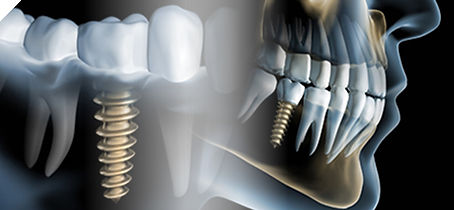
Dental implant is a metal screw that is placed into the jaw bone in the same area where the roots of your teeth once were. They can be used to anchor crowns , bridges and dentures.


3. Implantology
Dental Implants are artificial devices used to replace missing teeth. Implants come in many different sizes and shapes and they are placed into the bone to act as support for a prosthetic crown. These are the most modern method of replacing missing teeth. They are basically substitutes for the natural tooth roots. They are made of titanium and are usually cylindrical in size.
BENEFITS
Dental implants have given countless patients many amazing benefits including
-
Natural tooth like feeling
-
Improved appearance
-
Improved comfort
-
Improved speech
-
Eat better, enjoy more foods, better nutrition
-
Convenience
-
Improved self esteem
Dental implants are a great value for your investment. Implants look much better, and feel better, than traditional removable bridges, and offer the same force for biting as bridges that are fixed in place. Implants will last your lifetime.!!!
PROCEDURE
STAGE ONE -
The Implant Procedure
The implant procedure is the same whether one or all teeth are missing. In this example, there is only one missing lower tooth. For the purpose of demonstration we will assume the patient is healthy and is a candidate for this procedure.
Placing the Implant
Involves the placement of specific size and shape implants at strategic locations in the mouth. This is performed under local anaesthesia and the entire procedure takes approximately 45 minutes to one hour. Usually the healing is uneventful as the patient is on the prescribed drugs. Implants can also be placed immediately after extractions.
The Healing Process - Osseointegration
The healing process takes two to three months. This is the amount of time it usually takes for the implant to become part of the lower jaw, commonly referred to as osseointegration. ( osseo - bone ; the bone starts forming around the implant and the implant gets integrated into the bone tissue).
STAGE TWO-
Attaching the Abutment
Today's technologies often include zirconium abutments attached to the implant post, to assure that the new porcelain tooth possesses translucency properties similar to a natural tooth.
Placing the Crown
After impressions are taken a crown is made and shaded to match your existing teeth. The crown is then slipped over the post and cemented.
The Completed Implant
The final prosthetic crown appears as a natural tooth.
Applications of Implant Dentistry
In many cases, dental implants are incorporated into an overall treatment plan that might focus on the replacement of several teeth. Some patients have the option of replacing each affected tooth with a new implant, depending upon the condition of the bone. Other treatment plans may require implants for anchoring bridges and dentures.

4. Restorative dentistry:-
Restorative dentistry is the study, diagnosis and integrated management of diseases of the teeth and their supporting structures and the rehabilitation of the dentition to functional and aesthetic requirements of the individual.
-
Fillings:- Once the decay has been removed, the dentist will prepare the space for the filling by cleaning the cavity of bacteria and debris. If the decay is near the root, your dentist may first put in a liner made of glass ionomer, composite resin, or other material to protect the nerve.
-
Inlays and outlays- Dental inlays and onlays are used when old fillings need to be removed or replaced. A dental inlay is similar to a filling and fits inside the cusp tips (top edges) of the tooth. A dental onlay is more extensive and extends over the cusps of the treated tooth.


5. Endodontics
Endodontics (from the Greek roots endo- "inside" and odont- "tooth") is the dental specialty concerned with the study and treatment of the dental pulp.
Root canal Treatment:- Root canal treatment is the removal of the tooth's pulp, a small, thread-like tissue in the center of the tooth. Once the damaged, diseased or dead pulp is removed, the remaining space is cleaned, shaped and filled. This procedure seals off the root canal. Years ago, teeth with diseased or injured pulps were removed.


6. Prosthodontics
Prosthodontics, also known as dental prosthetics or prosthetic dentistry, is the area of dentistry that focuses on dental prostheses. It is one of nine dental specialties recognized by the American Dental Association (ADA), Royal College of Dentists of Canada, and Royal Australasian College of Dental Surgeons.


7. Oral medicine
Oral medicine (sometimes termed dental medicine, oral and maxillofacial medicine or stomatology) is a specialty focused on the mouth and nearby structures. It lies at the interface between medicineand dentistry.

8. Paedeatric dentistry
Pediatric dentists are dedicated to the oral health of children from infancy through the teen years. They have the experience and qualifications to care for a child's teeth, gums, and mouth throughout the various stages of childhood.
Paediatric Dentists provide the following services for children
-
fillings and extractions
-
root canal treatment of primary teeth and crowns
-
preventive services: sealants, flouride therapy
-
orthodontics in the early mixed dentition
-
management of traumatic injuries to primary teeth
-
caries risk assesment
-
dental treatment for children with special needs
-
dental treatment for very young and apprehensive children
-
infant oral health services




9. Periodontics
A periodontist is a dentist who specializes in the prevention, diagnosis, and treatment of periodontal disease, and in the placement of dental implants. Periodontists are also experts in the treatment of oral inflammation.
WHAT IS PERIODONTAL DISEASE?
Periodontal (gum) disease, including gingivitis and periodontitis, are serious inflammatory disorders that, left untreated, can lead to tooth loss. The word periodontal literally means "around the tooth." Periodontal disease is a chronic inflammatory disease that affects the gums and bone supporting the teeth. Periodontal disease can affect one tooth or many teeth. It begins when the bacteria in plaque (the sticky, colorless film that constantly forms on your teeth) causes the gums to become inflamed.
Periodontists are dentistry's experts in treating periodontal disease. They receive up to three additional years of specialized training in periodontal disease treatment in both non-surgical treatments and periodontal plastic surgery procedures. Periodontists are also experts in replacing missing teeth with dental implants.
-
Non-Surgical Treatments
-
Gum Graft Surgery
-
Laser Treatment
-
Regenerative Procedures
-
Dental Crown Lengthening
-
Dental Implants
-
Pocket Reduction Procedures
-
Plastic Surgery Procedures

10. Orthodontic
Why Orthodontics ?
For most people, achieving a healthy, beautiful smile is the reason for receiving orthodontic care. If the look and arrangement of teeth do not particularly make you happy and you’re self-conscious about your smile, correcting your concerns with braces will greatly improve the way you look and feel.
Improving the arrangement and positions of your teeth with braces will make your teeth easier to clean and hence less prone to cavities and gum problems. Better positioning of your teeth will also make them less prone to external and internal injuries.
Good set of teeth makes sure that you have good chewing ability, healthy jaw joint function and balanced facial musculature.
When your braces treatment is done, you will have the smile you’ve always dreamt of and the confidence to show it off. We also want you to feel comfortable and confident throughout your entire orthodontic experience, and our practice is dedicated to making sure that you receive the quality care you deserve.
How Orthodontic Treatment Works
Orthodontic appliances are made of metal, ceramic or plastic. By placing a constant, gentle force in a carefully controlled direction, braces slowly move teeth to the proper position.
Today the braces are more comfortable, effective and faster. They are programmed to deliver optimum orthodontic forces in the right direction so that the teeth achieve their most correct position in the least amount of time. You can now choose clear or metal brackets or even invisible / hidden braces which do not show at all. Wires are far less noticeable, and the latest materials are designed to move teeth faster with more comfort. Even though orthodontic treatment is best done between the ages 10 and 13 years, today, any age is a great age to wear braces!
Duration Of Treatment
Orthodontic treatment time varies and can last between one and three years, depending on several factors including age, treatment method, and how minor or severe your case is. A big factor in a successful treatment is you! The more involved and diligent you are, the more efficient your treatment will be. For children, receiving interceptive or early treatment can also help provide a quicker overall treatment time.
Before beginning your orthodontic care, your doctor will discuss all of your options and provide an estimate for how long your full treatment may take.
Please contact our practice to schedule an appointment and learn more about orthodontics and the treatments we provide.

